Best branding studios for fintech startups in 2026
Most fintech founders searching for a branding studio are asking the wrong question. They’re looking for someone who can make their product look credible. What they actually need is someone who can make it feel trustworthy - across the pitch deck, the onboarding flow, the compliance-heavy landing page, and the dashboard their users open every morning.
Those are not the same thing. And most studios only solve one of them.
The market splits cleanly into two camps. Brand studios that think in logos, guidelines, and mood boards. Product studios that think in components, flows, and conversion. The best fintech branding work lives at the intersection - a system that holds up in every context, not just the portfolio screenshot.
I put this list together for founders who are approaching a real inflection point: a Series A closing, a go-to-market push, a fundraising round where the product needs to look like it belongs at the table. The studios here were chosen on three criteria:
Regulated-industry fit - experience in fintech, crypto, or adjacent categories where trust is load-bearing, not decorative
Brand plus product - ability to design beyond the logo into the actual product experience
Stage awareness - understanding that a seed sprint and a Series B rebrand are fundamentally different briefs
The part most roundups miss: A beautiful brand system that falls apart inside your product is not a branding success. It’s a trust gap dressed up in good typography.
What Makes a Great Fintech Branding Studio?
Before the list, the framework. Because “great portfolio” is not a hiring criterion - it’s a starting point.
Here’s what I actually look for when evaluating a studio for fintech work:
1. Experience in trust-sensitive categories
Fintech is not SaaS. The stakes are different. Users are handing over financial data, bank connections, investment decisions. A studio that has only worked on consumer apps or e-commerce brands does not automatically understand how to communicate regulatory credibility, security posture, or institutional-grade reliability through design.
Look for studios that have worked in fintech, crypto, cybersecurity, healthtech, or other categories where trust is a product feature - not just a feeling.
2. Brand that lives inside the product
Any studio can produce a brand guidelines PDF. The question is whether that system actually works when your engineering team tries to implement it, when a new feature gets built, when the mobile app needs to match the marketing site.
Ask to see how the brand extends into product UI, not just the landing page. If the only portfolio evidence is marketing screens and hero images, that’s a signal.
3. Stage fit
Stage | What you actually need |
|---|
Seed | Sharp identity, fast execution, fundable presence |
Series A | Full system: brand, product, site, investor materials |
Series B+ | Scale-ready architecture, rollout playbook, team handoff |
A studio that specializes in seed sprints may not have the depth for a full Series A rebrand. And a large agency built for Series B scale may be too slow and layered for a founder who needs to ship in three weeks.
4. Senior access, not account management
In fintech, the people on the call need to be the people doing the work. Junior designers interpreting a brief through layers of account management is a liability when the stakes are an investor pitch or a regulated product launch.
According to Clutch, team composition and direct access to senior talent are among the top factors founders cite when evaluating design partners for high-stakes projects.
Key question to ask any studio: Who will be on the weekly call with me, and is that the same person designing the work?
The Best Branding Studios for Fintech Startups in 2026
The five studios below are not interchangeable. Each has a distinct model, a different kind of client they work best with, and a real point of view on what fintech branding should do. Read the “best for” line carefully - it’s the most useful part.
1. heartbeat
The only studio on this list that treats brand and product as a single system, not two separate projects.
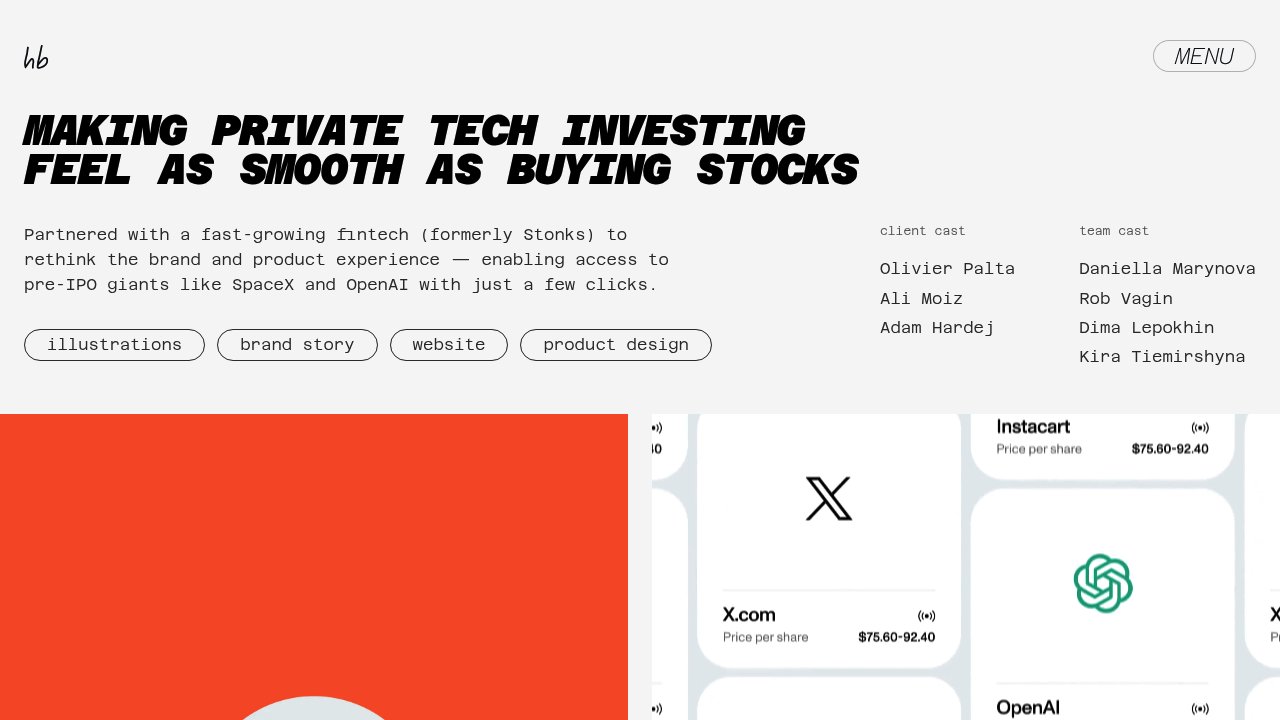
heartbeat is a seven-person senior studio based in Spain and Ukraine. No juniors. No account layers. The people on the discovery call are the people doing the design work. That matters more in fintech than almost any other category, because the brief is usually complex - regulated product, institutional trust signals, fast timeline, investors watching.
The studio’s model is built around sprints: a focused 10-15 business day engagement that takes a fintech from identity foundation to implementation. For founders who need to move fast without sacrificing depth, that structure is rare. Most studios that move fast are cheap and shallow. Most studios that go deep are slow and expensive. heartbeat built a model that sits in the gap.
Their fintech portfolio is specific. Sandhill (formerly Stonks) - a pre-IPO investing platform giving retail investors access to SpaceX and OpenAI - needed a full brand and product redesign that could hold up against institutional comparisons. First Digital, the Hong Kong-based custodian behind FDUSD, a $3B stablecoin trusted by Binance and global institutions, came back for a second engagement. Those are not generic SaaS clients. They’re regulated, trust-critical, and scrutinized.
Best for: Series A and Series B fintech founders who need a complete system - brand, product, site, investor materials - built by senior designers who understand what “trust” means in a regulated context.
Notable work: Sandhill (pre-IPO investing), First Digital ($3B stablecoin), Caplena (AI analytics for DHL, FlixBus, Lufthansa), Deepengine (Swiss DevSecOps, compliance-first)
Starting from: $35K (initial fixed-scope sprint, a month or longer) | heartbeat.ua
2. Ragged Edge
The studio to hire when positioning is the problem, not just the visual identity.
Ragged Edge is a London-based brand strategy and identity studio with a reputation for not taking on projects that don’t have a clear strategic foundation. That selectivity is a feature, not a limitation. If a fintech founder comes in knowing what they do but not why it matters, or how to say it in a way that cuts through a crowded category, Ragged Edge is built for that conversation.
Their work tends to be culturally resonant and narratively driven. For fintechs that need to establish a distinct point of view in a market full of identical blue-and-white trust signals, that kind of strategic pressure is valuable.
Best for: Series A fintech companies that need positioning and messaging rebuilt from scratch, not just a visual refresh. Founders who have a clear product but a fuzzy story.
Notable work: Fintech and challenger brand identity work across the UK market. Known for bold, strategy-led transformations.
Starting from: Typically $60K+ for strategy-led engagements
3. Koto
Premium brand systems for tech companies with global ambitions.
Koto has offices in London, New York, and Berlin. Their work is visually ambitious - contemporary, optimistic, built for scale. They’ve worked with well-known tech brands and their portfolio signals a studio that understands how a brand needs to travel across markets, languages, and touchpoints.
For a fintech approaching Series B or preparing for international expansion, Koto’s multi-office model and global brand experience becomes relevant. The trade-off is price and pace. This is not a sprint studio. Engagements run longer and cost more, which is appropriate for the scope they’re built to handle.
Best for: Series B+ fintech companies preparing to scale internationally, or companies that need a statement-making rebrand with serious visual ambition.
Notable work: Global tech and fintech brand systems across US, UK, and European markets.
Starting from: $80K+, with larger engagements running significantly higher
4. MetaLab
Product-first thinking, applied to brand.
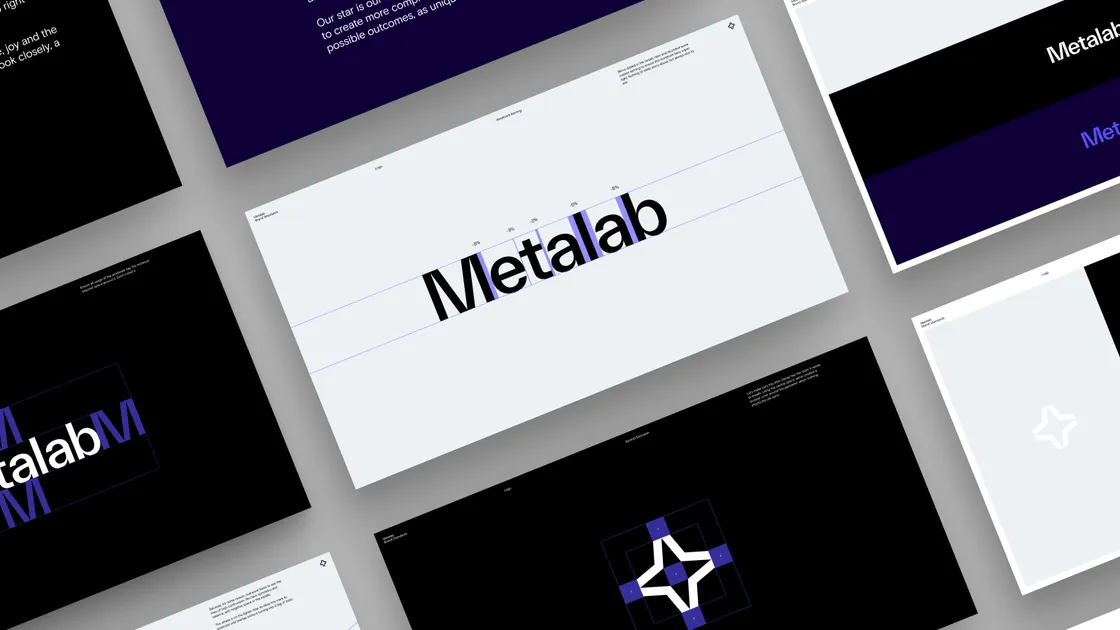
MetaLab built their reputation on product design - their work on Slack’s early interface is well documented. That product-first DNA shapes how they approach branding: they think about how an identity system performs inside a product, not just on a marketing site.
For a fintech with a working product that needs to close the gap between the quality of the technology and the quality of the experience, MetaLab’s approach is relevant. They understand that brand is not a layer you apply on top of a product. It’s the logic that makes the product feel coherent.
Best for: Fintech companies with established products that need to elevate the experience to enterprise-grade quality. Less suited to early-stage founders who need speed and a tight budget.
Notable work: Slack, Uber, Disney (product and brand work). Fintech and enterprise product design.
Starting from: Enterprise pricing; expect $100K+ for comprehensive engagements
5. The Branx
Fast, focused, and built for B2B tech startups on a real budget.
The Branx is a branding studio with a clear niche: B2B SaaS, AI, and fintech startups that need solid brand work done efficiently. They’re not trying to be Koto. They’re trying to be the right fit for a seed or early Series A founder who has $30K-$60K to spend, a launch coming up, and no time for a six-month agency process.
The work is clean and competent. It won’t win design awards, but it will give a fintech startup a professional, scalable identity that holds up in investor decks and on a product landing page. For founders who need to move from “looks like an MVP” to “looks like a real company” quickly, that’s the brief they’re built for.
Best for: Seed and early Series A fintech and SaaS startups with limited budgets and tight timelines. Founders who need a functional brand system, not a brand transformation.
Notable work: B2B SaaS and tech startup identity work across multiple verticals.
Starting from: $15K-$40K depending on scope
Quick comparison: If you need brand and product as one system, heartbeat. If you need positioning rebuilt first, Ragged Edge. If you’re scaling globally at Series B+, Koto. If your product needs enterprise-grade polish, MetaLab. If you need solid work fast on a real budget, The Branx.
How Much Does Fintech Branding Cost in 2026?
This is the question most roundup posts avoid. Here’s a straight answer.
Fintech branding commands a premium over generic startup branding because the complexity is higher: regulated messaging, trust signals, product integration, and compliance-aware design all require more senior judgment and more careful execution. Industry pricing data consistently shows that studios with genuine fintech experience price accordingly.
Budget bands by scope
Scope | What’s included | Typical range |
|---|
Launch sprint | Core identity, logo system, basic guidelines | $15K - $40K |
Full Series A rebrand | Brand strategy, identity, site, product UI patterns, investor materials | $60K - $150K |
Ongoing retainer | Monthly senior design support, marketing assets, product QA | $7.5K - $25K/month |
A few things worth knowing before you budget:
The $15K-$40K range gets you a functional identity. It rarely gets you a system that scales without additional work later.
Series A fintech founders should realistically plan for $60K-$150K if they want brand, product, and site handled together. Trying to do it for $20K usually means doing it twice.
Retainers make sense once the foundation is built. Using a retainer to build the foundation is expensive and slow.
Fintech-specific work costs more than generic startup branding because trust, compliance context, and product integration raise the stakes. That premium is real, and it’s worth it.
The hidden cost of underinvesting: A brand system that needs to be rebuilt before your Series B is not a savings. It’s a sunk cost plus a delay.
How Long Does a Fintech Rebrand Take?
Timeline is where most founders get surprised. They assume branding is faster than engineering. Sometimes it is. Often it isn’t - especially when the brief includes product, site, and investor materials alongside identity.
Here’s what realistic looks like:
Timeline by engagement type
Brand sprint (2-4 weeks) Identity foundation, logo system, core guidelines, and basic application. The right scope for a seed-stage company that needs to look fundable before a pitch. Not enough for a company that needs its product redesigned at the same time.
Full Series A rebrand (6-10 weeks) Brand strategy, visual identity, website, product UI patterns, brand guidelines, and rollout materials. This is the scope most Series A founders actually need, and the timeline that most studios underquote in the sales process. If a studio is promising a full rebrand in three weeks, ask what’s getting cut.
Series B scale-up (10-16 weeks) Full system architecture, multi-market rollout, design system documentation, team handoff. Built for companies where brand consistency across 50+ people and multiple product surfaces is the actual problem.
What affects speed most:
Team composition - a senior team with direct access moves faster than a layered agency structure. No brief translation, no junior interpretation.
Decision speed on the client side - the biggest delays in branding projects are usually founder availability and internal alignment, not studio execution.
Scope creep - starting with “just brand” and expanding to “and also the product and the site” mid-sprint is the most common reason timelines double.
Practical note: If you’re planning a fundraise or a product launch, build the rebrand into your timeline with a two-week buffer. Most studios will hit their dates. Some won’t. Plan for the variance.
How to Choose the Right Studio for Your Fintech Startup
Portfolio review is table stakes. Here are the five questions that actually separate the right studio from a good-looking one.
1. Have you worked in regulated or trust-sensitive industries?
Not “have you worked with startups” - that’s everyone. Ask specifically about fintech, crypto, healthtech, or cybersecurity. These categories require a different level of care around messaging, visual credibility, and compliance-aware design. If the answer is “not directly, but we’ve done SaaS,” that’s useful information.
2. Can you show me how the brand lives inside the product?
Ask for a case study where the brand system extends into a product dashboard, an onboarding flow, or a mobile interface. If the portfolio only shows marketing sites and hero images, the studio is a brand studio - not a brand-plus-product studio. That distinction matters at Series A.
3. Who will actually be doing the work?
This is the question most founders forget to ask. Get a name. Understand whether that person is a senior designer or a project manager who hands briefs to a junior team. In fintech, the judgment behind the design decisions matters. You want the person with 10 years of experience making the calls, not interpreting them through a layer of account management.
4. What’s the engagement model - sprint, retainer, or project?
Each model has different implications for your timeline, budget, and ongoing relationship. A sprint is fast and contained. A retainer assumes the foundation is already built. A project-based engagement can be either. Know which one you’re buying before you sign.
5. How do you measure success after launch?
A studio that only measures success by “how the work looks” is missing the point. The right answer involves some combination of: investor feedback, user trust signals, conversion on the marketing site, design system adoption by your internal team, and how well the brand holds up six months after the engagement ends. Fintech leaders increasingly treat brand consistency as a measurable business outcome, not just an aesthetic one.
The short version: choose based on fit, not prestige. The studio that has worked on the most famous brands is not automatically the right studio for your stage, your category, or your timeline.
If you’re still shortlisting and want to talk through whether heartbeat is the right fit for what you’re building, we’re easy to reach. No pitch, no pressure. Just a conversation.